What Leads to a Low Anion Gap in Blood Tests?
What exactly is the Anion Gap?
The anion gap is a computed value used to assist in interpreting electrolytes in a blood test. It reflects the balance between positively charged particles and negatively charged particles in the bloodstream. In everyday lab interpretation, it is often estimated from sodium, chloride, and bicarbonate values. Because these numbers come from a standard chemistry panel, the anion gap can provide clues about acid-base status and whether there may be a hidden metabolic disturbance.
A blood test does not directly measure the anion gap. Instead, the result is based on lab values on a blood chemistry panel. This makes it a useful overview tool rather than a stand-alone diagnosis. A low result is an unusual lab finding that deserves careful lab interpretation, especially if it appears on a repeat blood test or is associated with other abnormal findings.
The result is influenced by electrolyte balance, protein levels, and sometimes testing methods. That is why a low anion gap can be caused by a true underlying condition or by a false low result. Understanding the basics helps make the number more meaningful in context.
How an Anion Gap Calculator Functions
An Anion Gap Calculator uses key lab values from a standard chemistry panel to determine the anion gap. The calculator typically begins with the measured sodium value, then subtracts chloride and bicarbonate. This basic calculation gives a number that helps clinicians assess electrolyte balance more closely.
Because the result is calculated from a blood test, the calculator depends entirely on the accuracy of the reported data. If sodium, chloride, or bicarbonate is entered incorrectly, the result may point to a low anion gap even when the real value is normal. That is why the calculator is helpful for quick review, but not a substitute for expert evaluation.
The Anion Gap Calculator is especially helpful when reviewing acid-base status and spotting patterns that may suggest an underlying condition. A low value can reflect changes in albumin, shifts in serum proteins, or exposure to certain substances. It can also reveal measurement error or other issues in the lab process.
In practice, the calculator supports diagnostic evaluation by showing how sodium, chloride, and bicarbonate interact. It may help explain why a patient’s blood test results do not fit a typical pattern and whether follow-up testing is worth considering.
What Defines a Reduced Anion Gap?
A decreased anion gap is recognized by checking the measured value with the lab’s reference range. Numerous laboratories publish a normal range that specifies what counts as expected for their testing method. Because methods vary, the exact cutoff is different everywhere.
For that reason, the same number can be reported differently depending on the lab. A result that looks low in one setting might still be close to normal in another. This is why the reference range matters more than a single universal cutoff. The anion gap should always be interpreted alongside the patient’s serum albumin, overall protein levels, and other chemistry panel results.
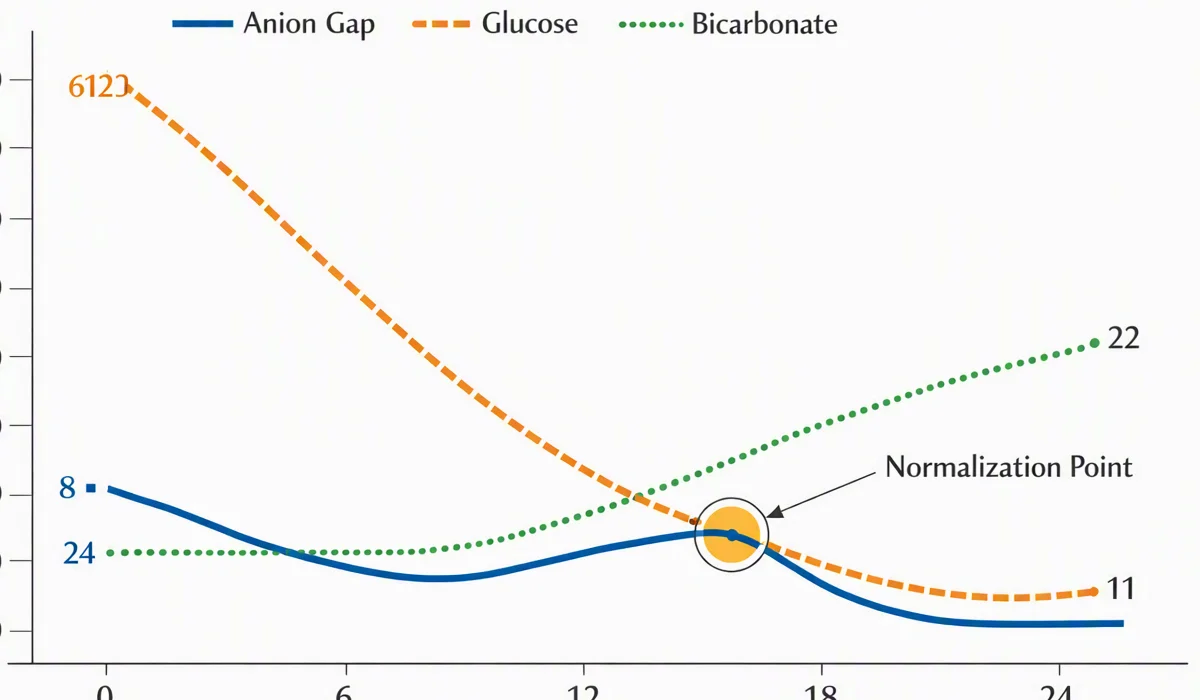
Low albumin is one of the most important reasons the anion gap may fall below the usual range. Since albumin is a major negatively charged protein in blood, reduced albumin lowers the calculated gap. Other serum proteins also matter, especially when abnormal proteins are present.
In other words, a low result does not automatically mean something dangerous is happening. It may simply reflect protein changes, a lab issue, or a medication effect. The number becomes more important when it stays low, is very low, or matches other abnormal findings.
Frequent Causes of a Decreased Anion Gap
The primary explanation for a reduced anion gap is hypoalbuminemia, which means reduced albumin in the blood. Since albumin helps maintain the normal electrical charge balance, reduced albumin can reduce the calculated value even when other electrolytes are balanced. This is one of the first things clinicians look at when assessing blood test results.
Another common cause is testing error. A reporting error can happen during drawing, transport, analysis, or data entry. Since the anion gap is calculated from multiple numbers, even a minor mistake in sodium, chloride, or bicarbonate can produce a misleading result. In many cases, the initial step is simply to repeat the blood test.
Abnormal serum proteins can also cause a reduced value. Conditions such as multiple myeloma may lead to excess abnormal proteins called abnormal proteins, and these can alter the expected charge balance in blood. A related term, paraproteinemia, refers to the presence of these abnormal proteins in the bloodstream. When present, they can change how the chemistry panel is read and may signal a larger underlying condition.
Other usual contributors include shifts in electrolyte balance and changes in acid-base status. However, when the value is unusually low, clinicians often first rule out hypoalbuminemia, lab error, and protein disorders before looking for other causes.
Medication and Exposure-Related Causes
Certain medications and exposures can lower the anion gap. One important example is lithium, which may alter blood chemistry and result in a low result in some situations. It is especially relevant when lithium levels are elevated or when there is concern for toxicity.
Other substances that can cause a low anion gap include bromide and iodide. They can disrupt laboratory measurements and may simulate chloride on some testing platforms. As a result, the chemistry panel may show an artificially high chloride and a falsely low anion gap.
When a toxic exposure is involved, the result is not merely a lab curiosity. It may be a warning sign of a medication effect or environmental exposure that needs prompt attention. The pattern should be reviewed in the full clinical context, including symptoms, medication list, and any possible toxic exposure.
Because these causes are less common than low albumin, they are often considered after more routine explanations have been checked. Still, they remain significant because identifying them early can prevent missed diagnostic evaluation of a potentially serious problem.
Could a Decreased Anion Gap Be Benign?
Absolutely, a decreased anion gap can occasionally be harmless, particularly if it appears once and the person feels okay. In an asymptomatic patient, the main question is whether the result shows a genuine body change or a false low result caused by measurement error. Many clinicians will start with repeat testing before pursuing an thorough workup.
Harmless does not mean irrelevant. It means the number must be understood with clinical context. A person with normal health, no symptoms, and an isolated somewhat low value may only need a repeat blood test and review of the chemistry panel. If the result returns to normal, the issue may have been a one-time lab error.
By contrast, a persistently low value suggests that there may be an underlying condition to consider evaluating. Even then, the cause is not always severe. It may simply be hypoalbuminemia or a change in protein levels. The key is to avoid overreacting to one number while also not ignoring repeated abnormalities.
The Anion Gap Calculator is useful here because it makes it more convenient to compare results over time. If the calculation stays low across repeated blood test results, the pattern becomes more significant and may guide follow-up testing.
Whenever a Low Anion Gap Requires Medical Follow-Up
A reduced anion gap calls for medical follow-up when it is persistent, very reduced, or along with other atypical findings. Conditions such as kidney disease and liver disease can affect protein levels, fluid balance, and the chemistry panel in that change the anion gap. These disorders may also produce broader changes in electrolytes and bicarbonate.
Evaluation is especially important when the decreased result appears along with symptoms such as fatigue, weakness, confusion, swelling, nausea, weight loss, or bone pain. These symptoms can suggest an underlying condition that merits a closer look. In some cases, a low anion gap may be an early clue rather than the main problem.
A diagnostic evaluation may comprise a repeat blood test, serum albumin, total https://anion-gap-values163.brightsora.com/posts/anion-gap-calculator protein, kidney function tests, liver function tests, and sometimes additional studies for paraproteins. This is particularly important when multiple myeloma or paraproteinemia is a concern. A low result in the blood chemistry panel may be one piece of a larger clinical picture.
In short, follow-up is more urgent when the result is not isolated, when symptoms are present, or when there are signs of renal impairment or liver dysfunction. The anion gap is most useful when it helps connect a lab abnormality to the rest of the patient’s story.
Frequently Asked Questions
What’s the most common cause of a low anion gap?
The most common explanation is hypoalbuminemia, or low albumin. Since albumin helps maintain the usual electrical balance of blood, reduced albumin often leads to a lower anion gap on the chemistry panel. Testing error and measurement error are also common, so repeat testing is often helpful.
Does low albumin cause a low anion gap?
Yes. Low albumin is one of the most common reasons for a low anion gap. Since albumin is a major negatively charged protein, decreased serum albumin lowers the calculated value. This is why clinicians often review protein levels when interpreting blood test results.

Is a low anion gap always a lab error?
No. A low result can happen because of a true medical issue such as hypoalbuminemia, multiple myeloma, or exposure to lithium, bromide, or iodide. Still, lab error and measurement error are common enough that repeat testing is often the first step. The result should always be interpreted in clinical context.
Which medications can lower the anion gap?
Lithium is the classic medication associated with a low anion gap. Certain substances such as bromide and iodide can also alter the result, sometimes through testing interference. In some cases, these changes may suggest toxicity or another medication effect.
When should a low anion gap be checked by a doctor?
A doctor should review a low anion gap if it is persistent, very abnormal, or occurs with symptoms. Follow-up is especially important if there is concern for kidney disease, liver disease, abnormal protein levels, or multiple myeloma. Even an isolated low result may deserve repeat testing if it does not fit the rest of the blood chemistry panel.